




Where we work
Mexico
Facts about Mexico
Population: 126.7 million
Area: 1,972,550 km2
Climate: Temperate
Capital: Mexico City
Currency: Peso
People: Mestizo 80%, Indigenous/Tribal 18%, Other 2%
Main language: Spanish and 68 Indigenous languages
Religion: 77% Roman Catholicism, 11.2% Protestant/Evangelical Christian, 8.1% declared having no religion; 4% unspecified
Area: 1,972,550 km2
Climate: Temperate
Capital: Mexico City
Currency: Peso
People: Mestizo 80%, Indigenous/Tribal 18%, Other 2%
Main language: Spanish and 68 Indigenous languages
Religion: 77% Roman Catholicism, 11.2% Protestant/Evangelical Christian, 8.1% declared having no religion; 4% unspecified
Geography and climate
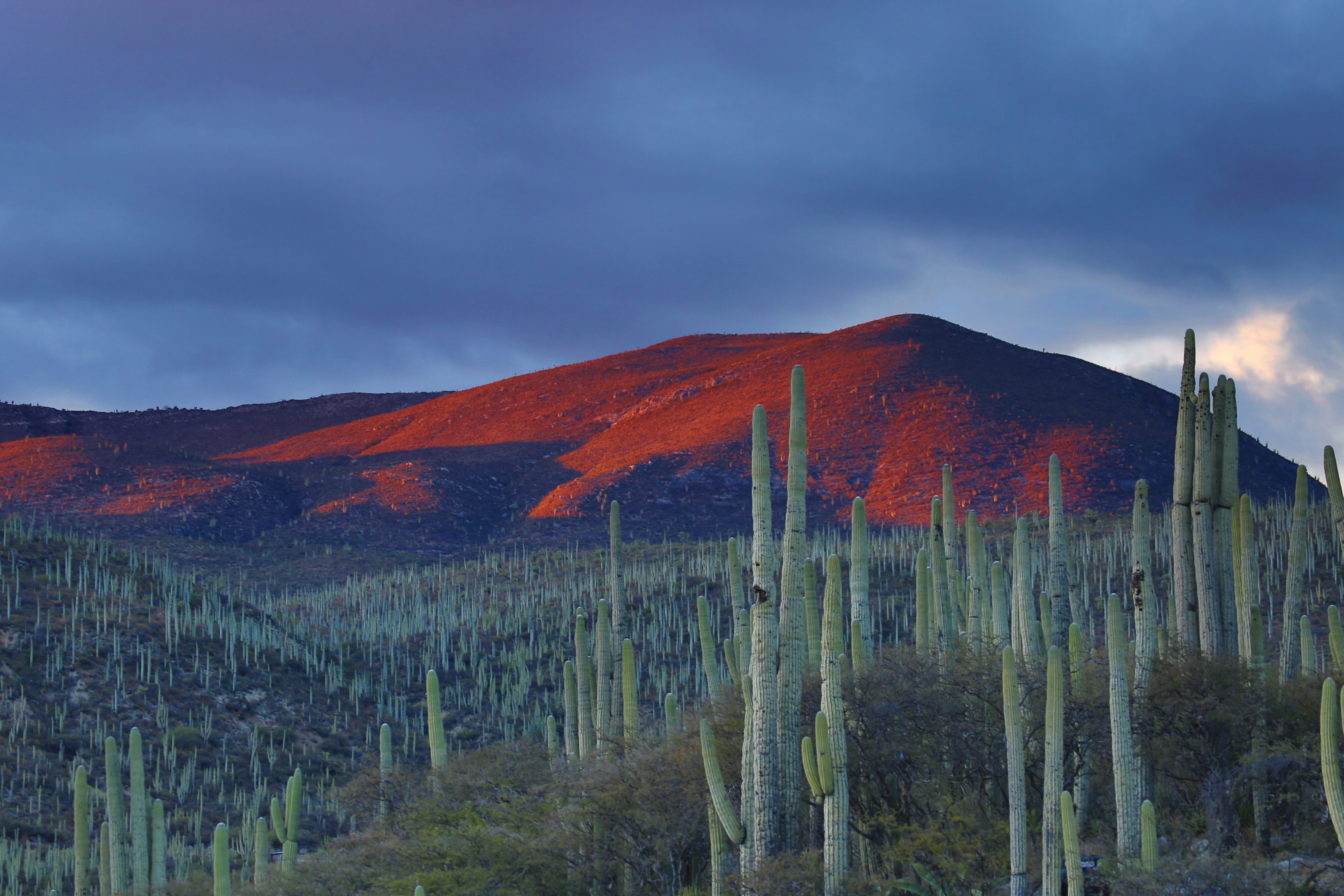
Mexico is located in the southern portion of North America. It is the world's 13th largest country by total area. It has coastlines on the Pacific Ocean and Gulf of California, as well as the Gulf of Mexico and Caribbean Sea, the latter two forming part of the Atlantic Ocean.
The Tropic of Cancer effectively divides the country into temperate and tropical zones. Land north of the Tropic of Cancer experiences cooler temperatures during the winter months. South of the Tropic of Cancer, temperatures are fairly constant year round and vary solely as a function of elevation. This gives Mexico one of the world's most diverse weather systems.
With over 200,000 different species, Mexico is home of 10–12% of the world's biodiversity. In Mexico, 170,000 square kilometres (65,637 sq mi) are considered "Protected Natural Areas". Some of Mexico's native culinary ingredients include: chocolate, avocado, tomato, maize, vanilla, guava, chayote, epazote, camote, jícama, nopal, zucchini, tejocote, huitlacoche, sapote, mamey sapote, many varieties of beans, and an even greater variety of chiles, such as the habanero and the jalapeño. Most of these names come from indigenous languages like Nahuatl.
Politics and economics
The United Mexican States are a federation whose government is representative, democratic and republican based on a presidential system according to the 1917 Constitution. Unlike many Latin American countries, the military in Mexico does not participate in politics and is under civilian control. Mexico is founding member of several international organizations, most notably the United Nations, the Organization of American States,the Organization of Ibero-American States, the OPANAL (Agency for the Prohibition of Nuclear Weapons in Latin America and the Caribbean) and the CELAC (Community of Latin American and Caribbean States). Mexico is considered a regional power hence its presence in major economic groups such as the G8+5 and the G-20.
People and society
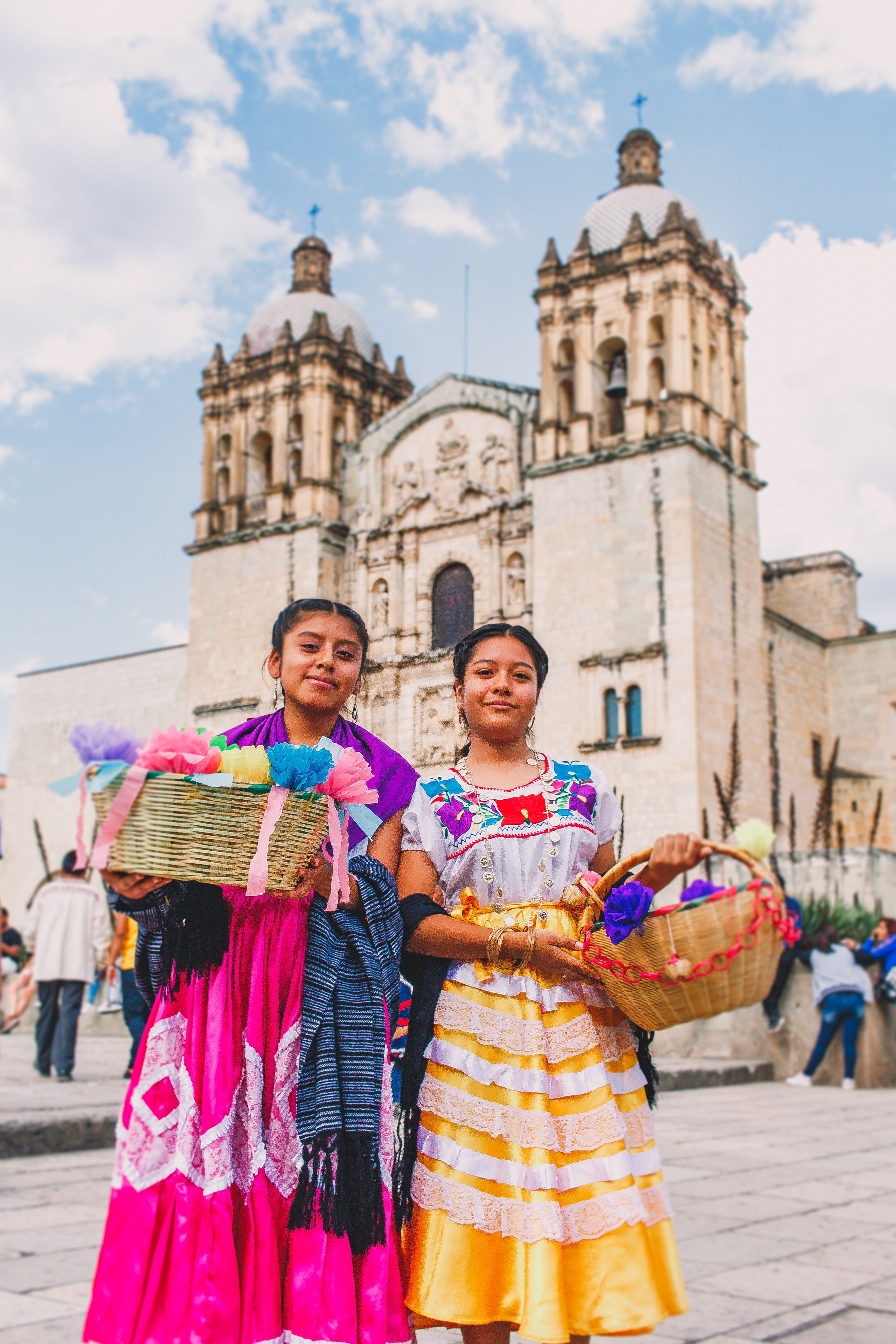
According to estimations made by Mexico's National Geography and Statistics Institute, as of 2017 Mexico has 123.5 million inhabitants making it the most populous Spanish-speaking country in the world. The majority of the population is mestizo, although the federal government officially recognizes sixty-eight linguistic groups and 364 varieties of indigenous languages.It is estimated that around 8.3 million citizens speak these languages, with Nahuatl being the most widely spoken by more than 1.7 million, followed by Yucatec Maya used daily by nearly 850,000 people. Regardless of ethnicity, the majority of Mexicans are united under the same national identity. Mexican culture reflects the complexity of the country's history through the blending of indigenous cultures and the culture of Spain, imparted during Spain's 300-year colonial rule of Mexico. Drug cartels are a major concern in Mexico.Mexico's drug war, ongoing since 2006, has left over 120,000 dead and perhaps another 37,000 missing.
Religion and the church
The 2020 census by the Instituto Nacional de Estadística y Geografía (National Institute of Statistics and Geography) gave Roman Catholicism as the main religion, with 77.7% (97,864,218) of the population, while 11.2% (14,095,307) belong to Protestant/Evangelical Christian denominations—including Other Christians, Evangelicals, Pentecostals, Jehovah's Witnesses, Seventh-day Adventists, and members of the Church of Jesus Christ of Latter-day Saints; 8.1% (9,488,671) declared having no religion; 4% (491,814) were unspecified.Catholics of Mexico constitute in absolute terms the second largest Catholic community in the world, after Brazil. The feast day of Our Lady of Guadalupe, the patron saint of Mexico, is celebrated on 12 December and is regarded by many Mexicans as the most important religious holiday of their country.
Latin Link's work in Mexico
God is answering our prayers for an increasing awareness of the calling of the Church to mission. This need continues to be latent. Join us in prayer for an attitude among Christians to want to grow and flourish in good fruit for God`s mission; that Christians will live in accordance with the ethics of the kingdom of God, having a balanced life in order to face all the new challenges.
Currently, our mission workers are involved in church planting, Bible studies for new believers and offering training to other Christian leaders to create new house groups and to make disciples among new Christians. Other members are working at the Casa del Sol (House of the Sun), a children's home, helping with youth ministry at a local church.
We pray for more people to join the team in Mexico: both national and overseas workers.
Meet our team in Mexico
Joel Gonzalez and Mayra Gomez de Gonzalez
Joel Gonzalez and Mayra Gomez de Gonzalez with son Joel Fernando, will focus on the editing of teaching booklets and books written by Joel in previous years; the preparation of
Mission opportunities in Mexico
No items found